
How Do We Live Well?

Today I found myself asking an old question.
Not a new question.
Not a trendy question.
Not a question born from branding, strategy, content planning, or trying to find my niche.
An old question.
One that has followed people across oceans, through migrations, through grief, through survival, through reinvention.
How do we live well?
Not simply how do we survive.
We have done that.
Our people have mastered survival in ways no people should have ever had to master.
We have survived theft, separation, silence, hunger, exile, violence, erasure, and still found ways to sing.
Still found ways to season food.
Still found ways to braid hair, bury our dead, raise our children, laugh on porches, pray over pots, and make beauty out of almost nothing.
Survival is not a question we are new to.
But living well?
That feels like something deeper.
Something older.
Something that keeps returning.
My parents asked it when they left Alabama.
Maybe they didn’t use those exact words.
Maybe they called it opportunity.
Maybe they called it getting out.
Maybe they called it wanting better.
But underneath the packing, the leaving, the hoping, the risk, the uncertainty, there was a question:
Where can we live well?
Where can we breathe?
Where can we work and not be broken?
Where can our children have more room than we had?
Where can our lives become something other than what the world has already decided for us?
And now, all these years later, I find myself asking a version of the same question.
Not from Alabama.
Not from the same road.
Not under the same sky.
But from the same longing.
Where can I live well?
Where can my spirit soften?
Where can my body stop bracing?
Where can I grow older without feeling like I am constantly negotiating with systems that were never built for my peace?
That question has become larger than geography.
It is not just about a country.
It is not just about leaving or staying.
It is about life itself.
How do we live well in a world that keeps asking us to perform wellness while denying us rest?
How do we live well when the news is heavy, the systems are loud, and the soul is tired?
How do we live well without abandoning truth?
How do we live well without becoming bitter?
How do we live well without pretending everything is fine?
That is where this new space begins.
Not with an answer.
With a question.
How do we live well?
No Limits No Barriers has been the place where I tell the truth.
It is the watchful griot.
The alarm.
The witness.
The voice that says: look closer, remember deeper, do not be fooled.
That work still matters.
It will always matter.
But I am beginning to understand that truth-telling also needs a room to rest in.
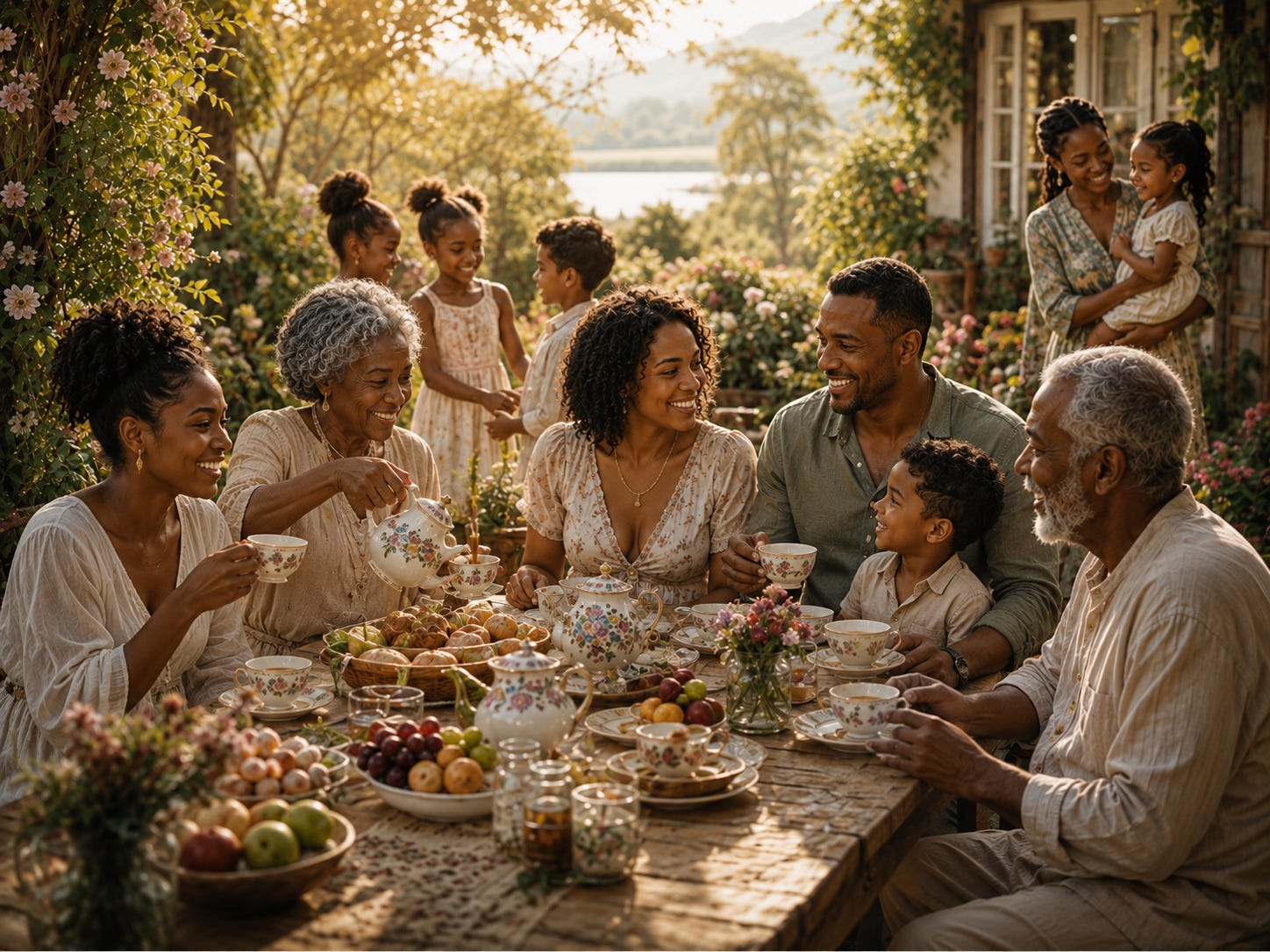
A room with tea.
A room with light coming through the window.
A room where the nervous system can exhale.
A room where Zola can wander in, sit quietly, and listen to the river.
Because Zola arrived this way too.
She was not constructed.
She was discovered.
A feeling came first.
Then a river.
Then a child.
Then a shell.
Then a family.
Then a memory.
Then one day, there she was.
No destination.
Just arrived.
Maybe the most meaningful work is like that.
Maybe it does not always come from force.
Maybe it comes from staying with a question long enough for it to reveal the next door.
And maybe “How Do We Live Well?” is one of those doors.
A quieter one.
A softer one.
But not a weaker one.
Because softness is not surrender.
Rest is not defeat.
Peace is not avoidance.
There is power in asking what kind of life we are building after we have named what tried to destroy us.
There is power in asking what we want our children to inherit besides our wounds.
There is power in asking where joy belongs in the middle of resistance.
So this is not me abandoning the fire.
This is me tending it differently.
This is me making another room in the house.
A room for reflection.
A room for remembering.
A room for the question that has followed my people, my parents, my children, my ancestors, and now me:
How do we live well?
I do not have the full answer.
Maybe I never will.
But I trust the question.
And for now, that is enough.
No destination.
Just arrived.