
Absence Is a Language
A convergence of many thoughts

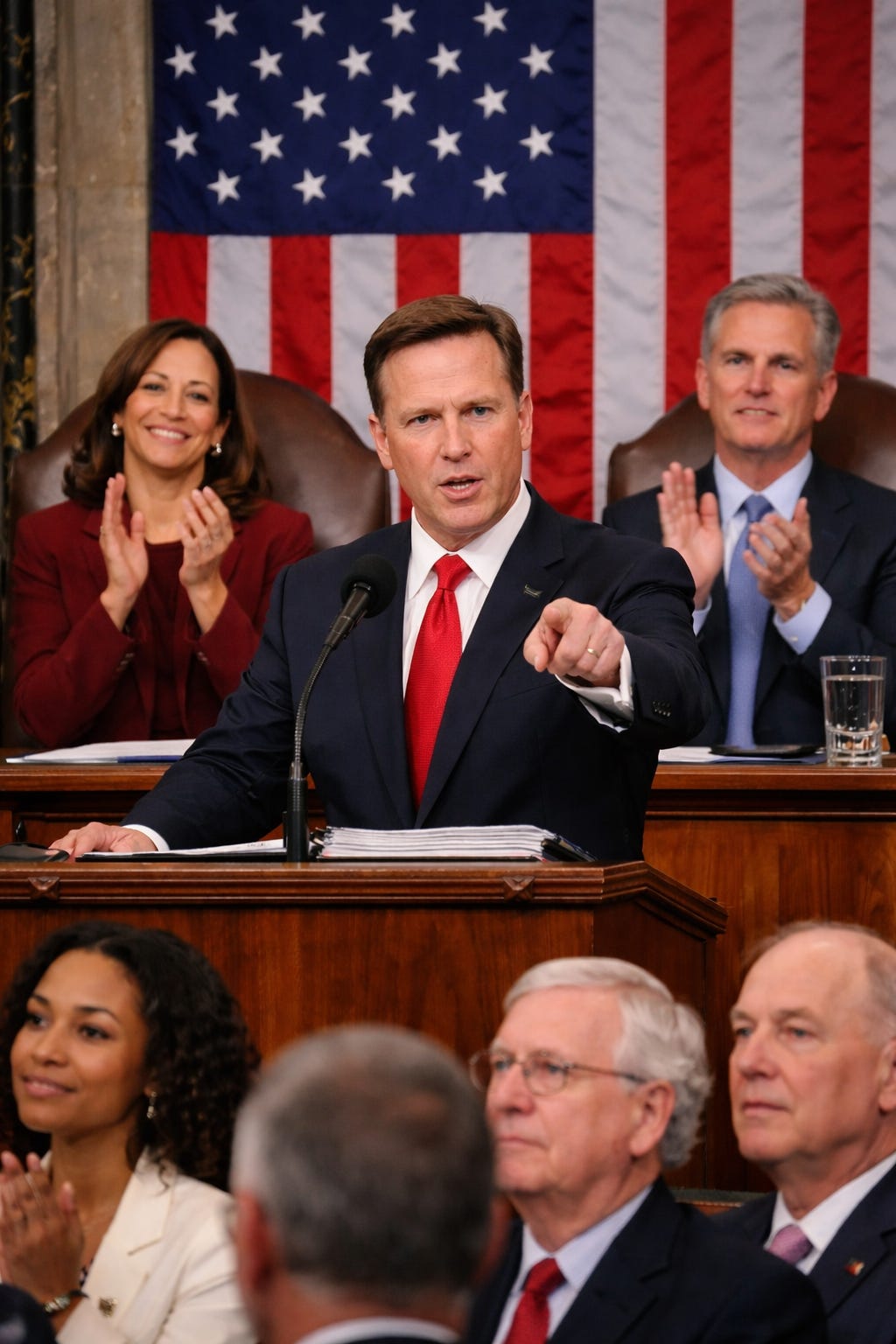
I watched the State of the Union last night. I usually do.
Trump appeared weaker than usual. Less aggressive. Less certain. Not restrained by discipline, but by awareness. A man who senses that time is no longer moving in his favor tends to conserve his energy.
What intrigued me more, however, was not his delivery, but who was absent from the room.
Several Supreme Court justices — Clarence Thomas, Neil Gorsuch, and Samuel Alito — were not in attendance. This mattered, especially given that only days earlier Trump publicly praised them for their compliance, applauding what he framed as loyalty while advancing policies that have already raised legal and ethical alarms, including tariffs imposed in defiance of established law and global norms.
Absence tells its own story.
What also stood out was that Sonia Sotomayor and Ketanji Brown Jackson were absent as well.
When an institution that prizes decorum and ritual quietly withholds its presence, that is not indifference. It is discernment. Supreme Court justices understand precisely what their attendance confers and what their absence withholds. They do not miss moments casually.
What makes this telling is not partisan alignment. It is institutional self-preservation and moral distance.
The State of the Union is meant to signal continuity, legitimacy, and shared civic grounding. When key figures opt out, it suggests a fracture in that shared fiction — a recognition that the moment may be more performance than substance, more spectacle than stewardship.
In Justice Jackson’s case especially, absence carries additional weight. She is acutely aware of symbolism, history, and how bodies are read in spaces of power. The memory of her confirmation hearings is still recent. The hostility was not subtle. The disrespect was not accidental. Choosing not to be present now does not read as disengagement. It reads as refusal. A refusal to legitimize the moment with her visibility.
I have not seen much commentary on this. That silence, too, feels instructive.
I was disappointed to see Hakeem Jeffries, a man frequently positioned as a future Speaker of the House. What unsettles me about the prospect of a Speaker Jeffries is not ambition, but temperament. These times require strength, not just strategy.
When recently pressed on the influence of the American Israel Public Affairs Committee during an appearance on TJRS, Jeffries was confronted by Wajahat Ali. Rather than engage the substance of the question, he grew defensive and declined to answer.
This is not about one individual. It is about how leadership behaves when history tightens its grip.
This moment demands leadership willing to shoulder responsibility without constantly angling for higher ground. Strength now looks less like polish and more like resolve. I am not convinced he is the man for the moment we are in, or that he understands what this moment requires.
We often get distracted arguing over who showed up because it is safer than asking why others stayed away.
That question forces a reckoning.
Not everything is a protest.
But some silences are verdicts.
Absence is a language.